Tone and voice are among the most subtle yet powerful tools in ethnographic writing, and among the most consequential. Every ethnographic text adopts a stance toward its material and toward the people it describes. That stance is communicated not only through what is said but through how it is said: through the rhythms and textures of sentences, through whose words are quoted and whose are paraphrased, through whether the writer appears in the scene or retreats from it, through whether the writing sounds angry or exhausted or ironic or reverent. These are not decorative choices. They are analytical and ethical ones.
This lesson has five movements. First, it clarifies what voice, tone, and perspective each mean and how they relate to one another. Second, it addresses the politics of voice or the question of who is speaking, on whose behalf, and with what authority. Third, it examines tone as analysis. By this we mean how emotional register can do argumentative work. Fourth, it introduces techniques for handling multiple voices in ethnographic prose, including free indirect discourse and polyphonic writing. Finally, it asks how all these tools can be deployed and what it means to deploy them, when writing from inside a field encounter.
1. Three Distinct Concepts: Perspective, Voice, and Tone
These three terms are often used interchangeably, but they name different things and it is worth keeping them separate.
Perspective refers to grammatical position: the point from which the narrative is told. First person (“I watched”) situates the ethnographer as an actor in the scene. Third person (“she watched”) creates narrative distance. Second person (“you watch”) implicates the reader directly. These are technical choices with significant effects.
Voice refers to how a grammatical position is inhabited: the intellectual and ethical stance the writing adopts. Two ethnographers can both write in first person while inhabiting completely different voices: one analytical and distanced, one participant and implicated, one collaborative and politically aligned. Voice is the sustained posture of the writer in relation to the material. It signals how you position yourself in relation to those you study (e.g., whether as critic, collaborator, witness, or ally) and it is this positioning that readers register, often before they can name it.
Voice can also literally refer to whose voice is being “heard” in the text. When you commit yourself to what others say (not just your interpretation or paraphrasing of what they say) by quoting directly, you introduce new voices.
Tone refers to the emotional atmosphere that the writing generates in a given moment. This is the register of a scene rather than the overall stance of the writer. Tone can shift within a piece: a passage can move from clinical to elegiac, from urgent to reflective, from ironic to tender. Tone is produced by word choice, sentence rhythm, what is lingered on and what is passed over quickly.
The relationship between voice and tone is one of interaction: a consistent voice provides the ground on which tone varies. When voice and tone are aligned (e.g., a vulnerable voice with an exhausted tone) they reinforce each other and build immersive authority. When they are in tension (e.g., an analytical voice that suddenly turns ironic) that tension itself becomes a form of argument. The reader feels the gap between how the writer is positioned and how they are feeling about what they are witnessing.
Consider how the same moment in a gig economy context can be rendered in different combinations:
Analytical voice, neutral tone: “Riders averaged 1.3 deliveries per hour during peak times, and platform algorithms penalized acceptance rates below 80 percent.”
Participatory voice, urgent tone: “I kept refreshing the app. With every refresh—$2.50 order, decline, refresh, $3.00 order, decline—I watched my acceptance rate drop. The platform didn’t care why.”
Witness voice, ironic tone: “The ‘partner’ platform paid its ‘partners’ $2.50 per delivery. Partners, it turned out, absorbed all the risk.”
None of these is more correct than the others. Each makes a different analytical claim and produces a different relationship with the reader. The question is which serves your purposes and whether you are making that choice deliberately.
2. The Politics of Voice: Speaking For and Speaking With
Voice in ethnographic writing is not only a craft question. It is a political and ethical one, because writing always involves representing others and giving an account of people’s lives, actions, and words typically for audiences who were not present. This raises a fundamental question: who gets to speak, and on whose behalf?
Linda Alcoff’s foundational essay “The Problem of Speaking for Others” (1991–92) argues that the location of the speaker—their social identity, their structural position—is not incidental to what they say but constitutive of it. When ethnographers speak for the people they study, they exercise a form of power: they select which experiences get represented, which words get quoted, and how those words get framed. The frame often does more analytical work than the words themselves. A quote presented as evidence of resilience reads differently from the same quote presented as evidence of false consciousness. The ethnographer’s voice mediates that framing, often invisibly.
Even when subjects seem to be speaking entirely “for themselves” – interviewees quoted at length, for example – their sovereignty is implicated at the level of interlocution, method, and textualisation (Simpson 2007). Sometimes sovereignty is reinforced by a representative voice, for instance when an Indigenous person, in “speaking for themselves, interrupt[s] anthropological portraits of timelessness” (Simpson p. 68). But sovereignty can also be compromised when being “heard” in dominant knowledge schemes requires the permission of an external institution, or the making-legible of something previously contained within a community.
This does not mean ethnographers should not write about others, or that only members of a community can write about it. Alcoff’s argument is subtler: it asks writers to be accountable for the effects of their representational choices. Whose interests does this account serve? Who is authorized to speak in this text, and who is spoken about? What does the framing assume about readers? Are they expected to identify with the ethnographer or with the people being described? These are not questions that admit of final answers, but they are questions that should be present in the writer’s thinking.
One practical implication is the distinction between writing about people and writing with them. This is the distinction between ethnographic accounts that present informants as data sources and those that present interlocutors as co-producers of knowledge. This is not only a methodological question but a tonal one: the voice of an account that treats people as informants sounds different from the voice of one that treats them as interlocutors. The choice of the word “informant” vs. “interlocutor” is already a voice decision, already a claim about the nature of the relationship.
3. The Vulnerable “I”: When the First Person Is an Ethical Stance
For some of anthropology’s disciplinary history, the first-person “I” was considered a contamination of the scientific record: a sign of bias, subjectivity, and insufficient distance from the object of study. The ideal ethnographer was invisible in the text, a transparent medium through which cultural data passed undistorted. We now understand this ideal to have been an illusion and, in many cases, a form of dishonesty: the ethnographer was always present, always shaping, always implicated. The fiction of objectivity simply concealed those facts.
Ruth Behar’s The Vulnerable Observer (1996) is an influential argument for reclaiming the first person as an ethical stance. Behar argues that the ethnographer who acknowledges their own emotional involvement, their vulnerabilities, and their limits does not undermine the authority of their account; they deepen it. Concealing the self does not produce objectivity; it produces a particular kind of fiction. Revealing the self, done carefully, produces a different kind of honesty: one that acknowledges that knowledge is always produced by someone, from somewhere, at some cost.
But Behar’s argument is not a license for autobiography that eclipses the people being studied. The risk of an over-present “I” is that the ethnographer becomes the main character: their feelings, insights, and transformations filling the space that should be occupied by the people they are writing about and the analytical claims they are trying to make. The test for any first-person passage is: whose story is this serving? If the “I” is in service of illuminating someone else’s experience or a larger analytical claim, it earns its place. If it is primarily in service of the ethnographer’s self-presentation or self-discovery, it may need to be cut or rewritten.
The best way to think of the first-person is as an instrument of relation. When the “I” is over-present, “creativity is not only worthless, it is lethal” (Ogden 2013), meaning that external reality is lost and the ethnography is absorbed into the self. But when the “I” is applied judiciously, the reader may be brought in close touch with the subject; for instance, a detailed description of how “I felt in the Singapore airport food-court as a Canadian” helps an Australian or Singaporean reader position themselves relative to me, not just to the airport staff. Ironically, this effect is achieved not by over-writing one’s own experiences, but by constantly keeping in mind the experience of the reader, who is the invisible third interlocutor of all ethnographic writing.
The vulnerable “I” is most effective when it reveals something the analysis needs: a moment of confusion that exposes a cultural assumption, a moment of discomfort that reveals a power dynamic, a moment of unexpected complicity that complicates the writer’s relationship to their material. Used this way, the first person is not navel-gazing but a methodological instrument.
4. Tone as Analysis: How Emotional Register Does Argumentative Work
Tone is often treated as something that happens to a piece of writing. It can be thought of as a quality of mood that emerges from the material. But tone is made, not found, and the choices that produce it are analytical choices.
Ironyis perhaps the most powerful tonal instrument available to ethnographic writers, and the most dangerous. An ironic tone places two registers in tension—the official account and the lived reality, what is said and what is meant—and allows the gap between them to do the analytical work. When a writer describes “the ‘partner’ platform” with its “partners,” the quotation marks around the institutional language enact a critique without stating it. The reader performs the analysis by recognizing the contradiction.
The danger of irony is that it can become a substitute for analysis rather than a vehicle for it. Irony that simply signals the writer’s sophisticated distance from their material (“look how absurd this is, look how clearly I see through it”) can become a way of asserting superiority rather than producing insight. Effective irony is precise: it locates the specific gap between claim and reality, institutional description and lived experience, official language and the body’s knowledge. On the other hand, it is also possible to use irony to the ends of self-deprication, revealing your own deficiencies, misapprehensions, or misfit status in a given context.
Reverence as a tonal mode is less commonly discussed but equally important. Some scenes and some lives call for a tonal register that acknowledges weight, dignity, and significance without explaining or interpreting them too quickly. A tone that slows down, that lingers, that chooses words carefully rather than efficiently: this is a form of respect. It communicates to the reader that what they are being shown matters, before the analysis tells them why.
Vulnerability and exhaustion are tones that carry their own analytical charge. Writing that sounds tired (short sentences, the accumulation of small details without resolution, pauses that don’t lead to insight) can convey the texture of depletion in ways that a statement about precarity cannot. The tone does not describe the condition; it enacts it.
Detachment can be a critical tool or an ethical failure, depending on context. A deliberately clinical tone applied to scenes of suffering can function as irony, producing unsettling distance in the reader. But detachment that is not deliberate, that simply reflects the ethnographer’s failure to fully inhabit the scene they are describing, produces prose that feels thin and evasive.
The practical lesson is that tone is chosen, not inherited from material. The same field encounter can be rendered in multiple tonal registers, each producing different analytical and ethical effects. Part of the craft of ethnographic writing is learning to make those choices consciously.
5. Free Indirect Discourse and Polyphony: Techniques for Multiple Voices
Ethnographic writing is rarely monological. The field is full of voices (people speaking, arguing, contradicting, reflecting) and the ethnographer’s voice is only one among many. How those multiple voices are handled on the page is a significant craft question.
Direct quotation gives voice to the people being studied in their own words. It is the most transparent technique but also the most deceptive: every quotation is selected, edited, and framed by the writer, and the framing can do more to shape its meaning than the words themselves. Quoting someone and immediately interpreting what they “really” meant, or what their words “reflect,” returns authority to the ethnographer and can silence the very voice being quoted.
If it is ever necessary to translate an individual’s speech, whether from one language to another, one dialect into another, or even by making minor grammatical edits to an unedited transcript, it is important to consider the stakes of “fluent” vs. “foreignizing” (Venuti 2012) quotation methods. In The Translator’s Invisibility, Lawrence Venuti distinguishes between translations that render unfamiliar languages “recognizable and intelligible..domesticated” (p. 6) and ones that place “an ethnodeviant pressure on those values to register the linguistic and cultural difference…sending the reader abroad” (p. 20). Both methods have serious ethical pitfalls, and risk severely misrepresenting their subjects to the benefit of a privileged reader. Nevertheless, whenever an ethnographer attempts to integrate different voices they must balance domestication against foreignization; sometimes allowing for textual awkwardness (for example, italicizing foreign words instead of directly translating them), sometimes drawing recognizable parallels across difference (for example, imperfectly translating an extended kinship term that literally means “all relations by blood, marriage or adoption" in one language to simply “family” in another).
Free indirect discourse is a literary technique that merges the ethnographer’s voice with the perspective of a person being described, without quotation marks and without attribution. “He accepted the $2.50 order. What else was he supposed to do?” The second sentence is not the ethnographer’s analysis; it is the worker’s thought, rendered in the ethnographer’s prose. The technique creates intimacy and allows the reader to inhabit another perspective without the staging of direct quotation. It is widely used in literary ethnography and memoir, and it requires careful handling: used well, it conveys interiority with precision; used carelessly, it can become ventriloquism or the ethnographer putting words and thoughts into a person’s mouth.
The distinction between polyphony and ventriloquism is one of the most important ethical distinctions in ethnographic writing. Bakhtin’s concept of polyphony—developed in his analysis of Dostoevsky’s novels—describes a narrative in which multiple voices retain their independence, their specificity, and their resistance to being absorbed into the author’s perspective (Bakhtin 1984). In a polyphonic text, characters speak for themselves; their voices are not simply instruments for making the author’s point. The ethnographic parallel is a text in which the people being written about retain the power to surprise, contradict, and complicate the analysis, where their words are not simply recruited as evidence for claims the writer has already decided to make.
Ventriloquism is the failure mode: when the writer quotes, paraphrases, or renders another’s perspective primarily to have it confirm the analysis. The person being described becomes a mouthpiece rather than a voice. The text sounds like it contains multiple perspectives, but they are all ultimately in service of a single interpretive authority. Avoiding ventriloquism requires genuine openness to what your material might be saying that you didn’t expect and a willingness to let that complicate or revise your claims.
Learning from Creatives
Creative:Italo Calvino
Creation:If on a Winter’s Night a Traveler (1979)
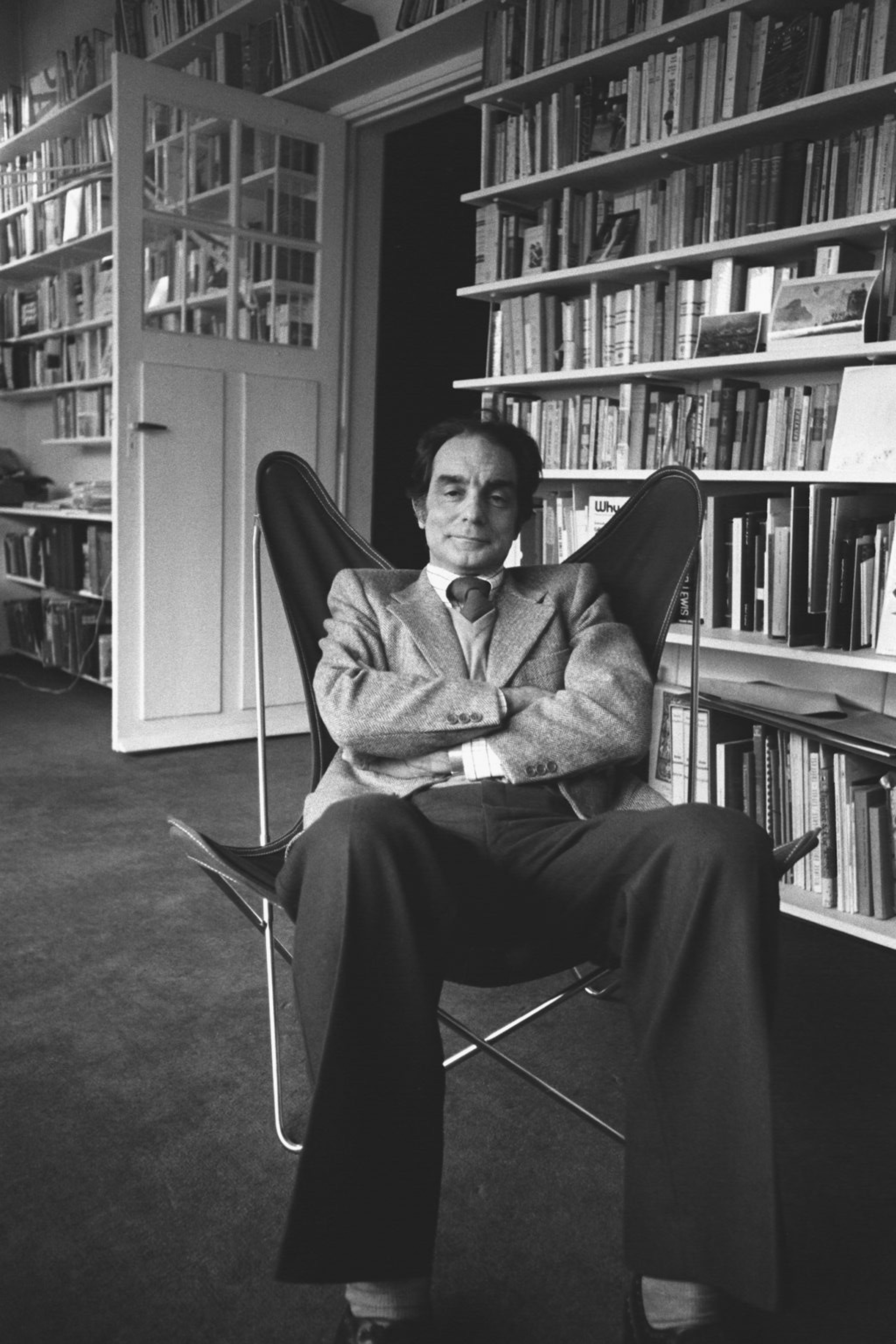
Ethnographic writing often aspires to coherence: a stable narrator, a clear voice, a singular interpretive arc. Calvino’s novel is a useful disruption of that aspiration—not necessarily as a model to imitate, but as a provocation to examine assumptions about narrative authority.
The novel opens by addressing its reader directly: “You are about to begin reading Italo Calvino’s new novel.” From the first sentence, the machinery of narrative is exposed. The “you” collapses the distance between narrator and audience. The acknowledgment of the author’s name inside the novel’s own first sentence dismantles the fiction of narrative omniscience. Throughout, the novel fragments into nested, unfinished stories: invented novels that begin and break off, metafictional reflections on reading and writing, shifting positions of narration. No single voice consolidates authority.
For ethnographers, the value of this formal experiment is not primarily its technique but its underlying question: what does it mean for a narrator to have authority over a story? Calvino shows that the conventions we use to establish narrative authority (the stable first-person, the coherent arc, the interpretive summary) are conventions, not necessities. They can be questioned, disrupted, or deliberately subverted.
Three Calvino-derived provocations are worth carrying into ethnographic practice:
The instability of the “you.” By addressing the reader directly, Calvino implicates them in the construction of the story. Ethnographers might occasionally use second-person not as a sustained stance but as a strategic device to place the reader inside a scene rather than outside it. “You accept the $2.50 order, knowing your acceptance rate will otherwise drop. What other choice do you have?” This is not merely stylistic; it shifts the ethical burden of the scene from the worker being observed to the structure of choice itself.
Fragmented authority as methodology. The novel’s interrupted narratives mirror how ethnographers actually encounter their material: in fragments, across time, with gaps and contradictions that resist closure. A text that acknowledges its own incompleteness—that marks where it cannot follow, where it cannot know—may be more honest than one that papers over those gaps with interpretive confidence.
Reflexivity as content, not confession. . Calvino’s novel does not simply reflect on its own construction in a confessional aside; it makes that reflection constitutive of the story itself. In ethnography, this might look like writing in which the conditions of knowledge production are not separated into a methods appendix but are present in the prose where the reader can feel how this knowledge was made and by whom.
6. From Field Note to Voiced Prose: A Worked Example
As in previous lessons, it is worth making the transformation from raw note to shaped prose visible.
Raw note: “Interview with D., warehouse supervisor. He kept looking at the door while we talked. Said the company ‘takes care of its people.’ Mentioned new break room. Seemed defensive. Later one of the workers told me the break room replaced a space they used for informal meetings.”
The note records observations and has some analytical instinct — “seemed defensive” — but the voice is absent. The contradiction between D.’s account and the worker’s account is noted but not handled. The tone is flat throughout.
Shaped prose: : D. kept his eyes on the door for most of the interview. The company, he told me, takes care of its people. There was a new break room—had I seen it?—installed just last year. I said I had. He seemed satisfied by this. Later, one of the line workers told me the break room had been built in the same space where people used to gather informally after shifts. The table was gone. The vending machine hummed where the conversations used to be.
Notice what changed. The direct quotation of “takes care of its people” (without the ethnographer’s interpretive gloss) allows the institutional language to sit in the prose unmediated, where the reader can hear its quality. The detail of the vending machine in the final sentence does the analytical work that the raw note tried to state: the company has replaced an unmanaged social space with a managed one. The tone is quiet and slightly cold, which is itself an argument. The voice is a witness: present, observant, not yet declaring a verdict.
The transformation involved the same three moves as in previous lessons: selection (the door, the break room, the vending machine), sharpening (the direct quote, the spatial contrast), and implication (letting the final detail carry the argument without stating it).
Works Cited:
Alcoff, Linda. 1991–92. “The Problem of Speaking for Others.” Cultural Critique 20:5–32.
Bakhtin, M.M. 1984. Problems of Dostoevsky’s Poetics. Edited and translated by Caryl Emerson. Minneapolis: University of Minnesota Press.
Behar, Ruth. 1996. The Vulnerable Observer: Anthropology That Breaks Your Heart. Boston: Beacon Press.
Calvino, Italo. 1979. If on a Winter’s Night a Traveler. Translated by William Weaver. New York: Harcourt Brace Jovanovich.
Ogden, Thomas H. 2013. Creative Readings: Essays on Seminal Analytic Works. London: Routledge
Simpson, Audra. 2007. “On Ethnographic Refusal: Indigeneity, ‘Voice’ and Colonial Citizenship.” Junctures the Journal for Thematic Dialogue, no. 9. www.junctures.org/junctures/index.php/junctures/article/download/66/60.
Venuti, Lawrence. 2012. The Translator’s Invisibility. Routledge eBooks.
Focus
Explore how narrative tone and voice shape ethnographic meaning.
Learning Goals
- Distinguish between perspective (grammatical position), voice (inhabited narrative stance), and tone (emotional register), and explain how they interact
- Identify the analytical and ethical claims being made by specific voice and tone choices in ethnographic writing by others
- Explain what is at stake in the choice to speak for versus speak with those you are writing about, drawing on Alcoff’s and Behar’s arguments
- Use the first-person “I” as an analytical and ethical instrument rather than a confessional or self-promotional device
- Recognize the difference between polyphonic writing that allows multiple voices to retain their independence and ventriloquism that recruits voices as evidence
- Apply free indirect discourse as a technique for rendering interiority while remaining accountable to the complexity of another person’s perspective
Activities
- Activity 1: Voice Identification and Analysis Read the three passages below, all describing the same moment (a researcher watching a manager address a group of warehouse workers). For each passage, identify: (a) the grammatical perspective, (b) the voice (analyst, participant, witness, ally, or a combination), (c) the dominant tone, and (d) what analytical claim the voice and tone are making, implicitly or explicitly. Passage A: “The manager addressed the group for approximately twelve minutes. Workers stood in a semi-circle. No questions were asked.” Passage B: “I stood at the back of the group while the manager spoke. I had been on shift for six hours. My feet hurt, and I kept thinking about the coffee I hadn’t been able to drink because there wasn’t time. He talked about the holiday schedule. People listened with their faces set in the particular way that means: we know what you’re going to say before you say it.” Passage C: “He thanked them for their flexibility. The holiday schedule was non-negotiable, but the company appreciated their dedication. Someone coughed. The manager smiled at no one in particular and left through the side door.” Reflection: Which passage do you find most analytically persuasive, and why? Is persuasiveness the same as accuracy? What would be lost if all three were combined into a single passage?
- Activity 2: Tone Rewrite The following field note passage is written in a flat, neutral register. Rewrite it three times: once with an ironic tone, once with a reverent tone, and once using a vulnerable first-person voice. Keep the core facts the same. Original: “The supervisor handed each worker a card at the end of the shift. It said ‘Employee of the Month’ and had a space for a name. The names were printed from a template. There was a small plastic trophy on a shelf near the exit. Most workers did not stop to look at it.” After rewriting, write two sentences for each version explaining what analytical claim the tone is making and what it forecloses. Which version do you find most honest to the scene?
- Activity 3: The Speaking For Problem Find a short passage in a published ethnographic text where the ethnographer speaks on behalf of the people being studied (e.g., interpreting their words, feelings, or motivations). Write a one-paragraph analysis that addresses: What assumptions does the ethnographer’s interpretive framing make? Whose perspective is centered? What would the passage look like if the same material were rendered in a way that gave more independence to the voice being described? This is not an exercise in criticizing the author. It is a way of making visible the choices that all ethnographic writing makes, including your own.
- Activity 4: Free Indirect Discourse Rewrite the following passage so that at least one sentence uses free indirect discourse (i.e., merging the ethnographer’s prose with the perspective of the person being described, without quotation marks or attribution). The goal is to give the reader access to interiority without ventriloquism. Original: “Maria said she didn’t mind working the night shift. She said the extra pay helped. But she looked away when she said it, and I noticed she had mentioned her children twice already.” After rewriting, reflect: how did you decide whose thought to render, and how much access to give? What are the risks of getting this wrong?
- Activity 5: Voice and Tone in Your Own Writing Take a passage from your own field notes or an earlier piece of ethnographic writing. Write a short analysis (200 words) of the voice and tone choices you made: What stance did you adopt: analyst, participant, witness? What tonal register did you use, and was it deliberate? Who speaks in the passage, and how are their words framed? Would you make different choices now? If so, rewrite the passage with those choices.