Ethnographic writing is born of relationships. Not just as a method for collecting data, but as the very substance out of which knowledge is made. The understanding you bring back from the field was produced in the company of others, through their generosity, their time, their trust, their refusals, and their contradictions. To write ethnographically is therefore always to write about that company—to represent, in some form, the relational texture of fieldwork—and this creates obligations that are ethical before they are methodological.
This lesson takes care and relationality as its central subjects, in two senses. First, it asks how relationality and care can be written with the complexity they deserves. Second, it asks how the act of ethnographic writing is itself a practice of care: for those you write about, for your readers, and for the truth of what you witnessed. Both questions resist easy answers, but both reward sustained attention.
The lesson moves through four major sections. First, it develops the theoretical concept of care and relationality, drawing on feminist scholarship that has transformed how both terms are understood. Second, it examines the asymmetries of power that are always present in care relationships and in ethnographic ones. Third, it offers practical guidance on writing care as something dynamic, braided with ambivalence, shaped by structural forces, and never reducible to its official account. Fourth, it addresses the ethics of representation as a form of care: what it means to protect, to expose, to honor, and to betray through the act of writing.
1. Care as Theory: Affect, Labor, and Obligation
Care
In everyday usage, “care” tends to refer to a feeling: concern for someone, a willingness to attend to their needs. But in the feminist scholarly tradition that has reshaped social science, care is something considerably more complex and considerably more demanding.
María Puig de la Bellacasa’s Matters of Care (2017) offers a very useful synthesis. Care, she argues, joins together “an affective state, a material vital doing, and an ethico-political obligation” (p. 42). This triple formulation is important because it insists that care cannot be reduced to any single dimension. Care is something felt—the affective orientation toward another being’s vulnerability and need. It is something done—the material labor of feeding, cleaning, tending, sustaining, which is typically unequal in its distribution across gender, class, race, and citizenship status. And it is something owed—an obligation that arises from interdependence and that carries political force, because the refusal or denial of care is a form of violence, and because who gets cared for and who is burdened with caring are questions answered by structures of power, not by nature.
For ethnographic writing, this triple formulation matters because it resists the sentimentalization of care. Care scenes in ethnographic prose can easily become occasions for the display of human warmth: the grandmother’s soup, the nurse’s touch, the neighbor’s meal left at the door. These moments are real and worth writing. But care rendered only as warmth leaves out the exhaustion, the resentment, the unpaid labor, the structural conditions that make some people perpetual givers and others perpetual receivers. It leaves out, in Puig de la Bellacasa’s terms, the political.
Veena Das (2007) and Cheryl Mattingly (2014) show how everyday care operates amid structural violence and chronic adversity. Das writes about how communities absorb and domesticate extreme suffering, not through healing in any conventional sense, but through the ongoing labor of ordinary life that continues despite everything. Mattingly, in her ethnography of African American families navigating the medical system with chronically ill children, shows how moral action in care is improvisational and contextual: people make ethical decisions not from a stable position of principle but from within the thick of relationships, institutional constraints, and material precarity. Her concept of the “moral laboratory” (the everyday as a site of ethical experimentation) is particularly useful for ethnographic writers because it resists the tendency to locate moral action in dramatic moments of choice. Care is mostly not dramatic. It is repetitive, habitual, and woven into the texture of daily life, which is exactly what makes it both hard to notice and important to write.
Relationality
Donna Haraway’s Staying with the Trouble (2016) extends the concept of relationships of care beyond the human. Her call to “make kin” is not an appeal to sentiment but a methodological and political provocation: to recognize that relation and obligation extend to non-human animals, ecosystems, and multi-species assemblages, and that understanding these relationships requires attending to co-constitution or the way beings are shaped by and through their relations with others, not prior to those relations. For ethnographers, this means remaining open to the relational worlds of those they study, which may include obligations and intimacies with non-human others that are not reducible to “beliefs” or “customs” but are forms of genuine interdependency.
But as “relationality” has become a buzzword and crossed from social theory into public politics, it sometimes serves to conceal obligations rather than highlight them. Eco-Marxist Andreas Malm has criticized theorists like Haraway for overextending anthropocentric notions of agency to non-human subjects, and in doing so shirking questions of political responsibility. After all, he argues, in the context of global warming and mass extinctions, it would be absurd to “demand that the oil platforms scrap themselves” or “ask CO2 molecules to come down from the heavens” (Malm p.117). His point (although overly dismissive of the ontological dimensions of new materialist projects like Haraway’s) is that amidst the rising tide of “bio-social assemblages” “material-semiotic fields” “nature-cultures” and so on, responsible theorists must prioritize strong ethical claims fully grounded in material reality, not just abstract entanglements.
Malm is an extreme critic of relational-ontologies, but we may take his warning at face value. Writing relationality is important because it is true, but true relationality always contains some key disparities between its subjects. Humans can have more agency than non-human objects; non-human objects can have more longevity than humans. Humans can have close, loving relationships to animals, but that doesn’t make animals “more human.” The best caregivers know that their dependents have specific individual needs that they may not understand, relate to, or be able to empathize with.
Any ethnographer who finds themselves writing about mystical or essential unities between people (including themselves), “nature,” animals, collectives or objects, should pause and reflect on what differences they are reducing or erasing. It is these differences that make caring for others laborious, and what makes it meaningful.
2. Asymmetry and Power in Care Relationships
Care is never symmetrical. Someone gives more than they receive, carries more than their share, absorbs more of the costs. These asymmetries are not random; they follow the lines of gender, race, class, age, and immigration status—among others—with remarkable regularity. To write care without writing its structural distribution is to write a partial truth.
Care work has been systematically feminized, racialized, and devalued across many of our societies. The labor of domestic workers, nurses, childcare providers, and unpaid family caregivers is economically undercompensated and socially undervalued in ways that are not incidental but structural. When you write a scene of care (e.g., a mother tending a sick child, a home care worker bathing an elderly patient) you are writing a scene that is also a scene of political economy, whether or not you name it as such. The question is whether your writing makes that visible or effaces it.
In Free Gifts: Capitalism and the Politics of Nature (2025), Alyssa Battistoni describes care work as a free gift: “something that can be taken without payment or replenishing; something that is materially useful but that tends not to appear in exchange” (p. 3). Free gifts are not external to capitalist commodification – they haven’t been ignored or excluded. Rather, they are commodities with a zero dollar value; their usefulness contradicts their valuelessness and their valuelessness makes them useful. For Battistoni, free gifts include unpaid care work, but also natural resources like photosynthesis, ecological regeneration, and trade winds that help reproduce capital without needing reciprocity or return. The intersectional issue here is not based on an essential link between femininity, racialization and nature, but the socio-political stakes of the uncompensated reproduction of life on earth. Or, to quote eco-feminist Ariel Salleh: “the woman = nature metaphor draws attention to the massive theft of women’s reproductive labors” (p. 186).
This has a direct implication for narrative choices. Instead of imagining moments of care and intimacy as uni-dimensional “escapes” from labor and politics, the ethnographer should look for where “capitalism may be operative even where its telltale signs—exchange value, wages—are not immediately in evidence” (Battistoni p. 10). It is also important to avoid essentialisms, especially in the domestic sphere. Humans have obligations regardless of race, class or gender: it is only a question of whose responsibilities are compensated. Romanticized depictions of femininity, maternity, and social/biological reproduction of all kinds can easily serve to justify the zero-dollar “free gift” —if women are natural caregivers, why should we have to resource them? If ecosystems naturally regenerate without our intervention, why should we have to stop demolishing them?
Perspective also counts: who anchors the scene? The caregiver’s experience of exhaustion, ambivalence, and invisible labor is typically less visible in public and institutional accounts of care than the recipient’s experience of need. Writing from inside the caregiver’s perspective (attending to the specific physical and emotional texture of care labor) can make visible what official accounts systematically conceal.
Asymmetry also structures the ethnographic relationship itself. The fieldworker occupies a position of significant power relative to most of those they study: they will leave the field; they control representation; their institutional position typically affords them material resources, mobility, and security that their interlocutors may not have. Acknowledging this asymmetry is not a matter of guilt management; it is a precondition for honest writing. The ethnographer who writes as though the fieldwork relationship were a friendship of equals, or who appropriates the emotional intimacy of fieldwork without acknowledging the power that shapes it, is producing a fiction. The ethical and analytic challenge is to write the asymmetry as part of the account and to let readers see the structure of the relationship, not just its affective surface.
At the same time, ethnographic relationships do involve genuine care. People offer their time, stories, and trust; the fieldworker is moved, changed, and obligated by what they receive. The question of what is owed in return (of reciprocity, of debt, of representation as repayment or as betrayal) is one of the oldest ethical questions in the discipline. It does not have a general answer, but it has specific ones that require attention in every fieldwork situation. Writing about people who have given you access and trust is an act that carries those debts inside it.
3. Writing Care: Holding the Intimate and the Structural Together
The central formal challenge in writing care is scale. Care happens in the body, in gestures, in the specific texture of a hand placing a spoon at the edge of a bowl, and it is simultaneously shaped by forces that operate far beyond the intimate: wage structures that leave no time for tending the sick, immigration policies that separate families across borders, histories of institutional racism that make certain bodies perpetually more vulnerable than others. The challenge is to write both scales at once without collapsing one into the other.
Some practical approaches:
The gesture as political site. A single action (e.g., a hand placed on a shoulder, a meal left at a door, a form filled out in triplicate at a government office) can carry both its immediate relational meaning and the structural weight that produced it. The key is specificity: the more precisely you render the gesture, the more it can hold. “He slid the spoon slowly, tilting it so she wouldn’t choke. The TV murmured in the background. She didn’t look at him, but her fingers tapped twice on the tray.” Nothing here is stated about the politics of elder care, the invisibility of domestic labor, or the intimacy that survives dependency, but a reader who has been prepared by the surrounding analysis can feel all of this in the gesture. The analysis does not need to be repeated inside the scene if it has been established outside it.
Juxtaposition as structural argument. Placing two scenes or two voices in proximity without explicit commentary can make visible the gap between institutional accounts of care and its lived reality, or between different people’s experiences of the same care relationship. “In the same room where his mother learned to bathe him, a bureaucrat now debates the cost of installing a ramp.” The juxtaposition does not explain the contradiction; it enacts it.
Recursion and temporal layering. Care relationships change over time (e.g., roles reverse, obligations shift, love curdles or deepens or both simultaneously). A scene written in the present that circles back to an earlier moment can show how a relationship has been remade by what it has been through. The child who becomes their parent’s caretaker; the nurse who has tended a patient long enough to mourn them. Recursive narration can trace how a single gesture (e.g., a hand on a shoulder) carries different meanings across years.
Refusal and silence as care data. Care is not only what people do; it is also what they decline to do, what they will not speak of, what they protect through non-disclosure. “I won’t talk about that” is relational information. Writing a refusal without framing it as failure, without treating it as an obstacle to the analysis, is an act of respect for the interlocutor’s own management of what they carry.
The weariness of repetition. Care is mostly habitual: the daily injection, the nightly meal, the same argument reproduced with slight variation across years. Writing this repetition without resolving it into something more dramatic honors the actual texture of care labor. The techniques from Lesson 4 (parataxis, recursion, withheld explanation) are directly applicable here: the monotony of labor can be enacted in the rhythm of prose, not just described.
Trapped in nouns. Avoiding essentialism is important when describing scenes of care. One way to denaturalize your language is to open up solid, fixed nouns into changeable verbs or adjectival form. For instance, swapping “The American People” for “American people” implies more difference and agency.
Finally, ask yourself, at each scene of care: What does this relationship do? What holds it together? What strains it? These questions orient the writing toward analysis rather than documentation, toward what the relationship reveals about the social world rather than merely what it looks like from the outside.
4. Writing Itself as an Act of Care
This final section raises what is in many ways the most important question: writing itself is an act of care, and the choices it involves are ethical before they are stylistic.
To write about someone is to represent them: to fix them in language for readers who have not met them, in ways that cannot be fully anticipated or controlled. This is an exercise of power. It can honor or diminish, expose or protect, humanize or reduce. The people you write about unfortunately still rarely have authority over how they appear in your text, and the gap between your account and their own self-understanding may be profound. Acknowledging this gap and holding it as a problem rather than assuming it away is itself a form of care.
Several specific tensions deserve naming:
Protection versus complexity. The most common form of care for interlocutors in ethnographic writing is anonymization and the omission of identifying details. These protections are real and necessary. But they can also become a form of erasure — smoothing away the specific textures of a life in ways that serve the ethnographer’s need for analytical generalization rather than the interlocutor’s actual experience. The question is not whether to protect but what you are protecting: identity, or complexity, or both, and at what cost to the truthfulness of the account.
Exposure versus honor. Sometimes the most honest account of a situation requires writing things that the people involved would prefer not to have written, because the analysis requires it, because the truth of the situation demands it, because others who live in similar circumstances deserve to see their experience represented fully. This tension between fidelity to truth and care for the person does not resolve neatly. It requires judgment, and judgment requires taking seriously both claims.
Whose exhaustion do you foreground? In any care scene, multiple people are present, with different positions, different stakes, different costs. The person who is visibly suffering is typically easier to write than the person whose suffering is invisible precisely because they are the one doing the sustaining. Choosing to write the caregiver’s exhaustion, their ambivalence, their private reserves of resentment or love—rather than the recipient’s need—is a political and ethical choice about whose experience matters.
What the reader risks. Care-writing implicates the reader too. It asks them to be moved by specific lives, to feel the weight of specific situations. This is a demand, and it is not always fully consensual. Writing that produces identification (i.e., that places readers inside a scene of vulnerability or loss) is exercising a form of power over the reader’s emotional life. Done with purpose, this is part of what ethnographic writing can do at its best. Done carelessly or exploitatively, it is a form of affective extraction that uses suffering as a resource for readerly feeling.
These are not questions that produce rules. They produce ongoing, situated judgment, the kind that Mattingly identifies as the substance of moral life. You will make different decisions in different texts, and some of them will feel, in retrospect, like errors. The commitment to keep asking the questions is itself a form of care.
Learning from Creatives
Creative:Hirokazu Kore-eda
Creation:Shoplifters (2018)
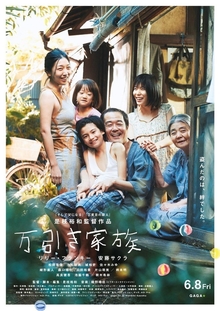
A family living in cramped poverty in Tokyo supplements their income by shoplifting. Over the course of the film, we come to understand that this family was not born into its current form: its members were assembled through acts of care, survival, and mutual adoption (a grandmother, a couple, children, a young woman) none of them related by blood, all of them held together by practiced intimacy and shared necessity. When the state intervenes and the family is separated, the film’s final act forces a reckoning with the difference between official kinship and chosen kinship, and between what institutions recognize as care and what actually sustains life.
What does the film argue about care and relationality?
Shoplifters refuses to sentimentalize its central argument. The care this family practices is real. It is tangible, embodied, and specific in its gestures and rhythms. Osamu teaches the boy to shoplift with the matter-of-fact tenderness of a parent teaching any practical skill. Nobuyo bathes Yuri with a patience that is also a form of recognition: she sees the child that no one else has seen. These are not pure or uncomplicated acts; they coexist with deception, with the ethics of theft, with the question of whether what the adults are doing serves the children or uses them. Kore-eda holds this ambivalence without resolving it.
The film’s structural argument is about what counts as care in the eyes of institutions and what does not. The biological mother who burned Yuri has legal standing; Nobuyo, who kept her safe, does not. The state, in dismantling the family, performs a kind of care (for child welfare, for legal order) that destroys the actual care network that was sustaining these lives. This is not presented as a simple injustice. The film stays with the trouble: it refuses the comfort of a clear verdict.
For ethnographers writing about care, this is a model of how to hold both scales at once. The intimate scenes are rendered with the kind of sensory specificity that makes the relationships feel real and particular. The structural forces (poverty, law, the welfare system) are present not as explanation but as the conditions that shape what care is possible, what forms it can take, and who bears its costs.
What formal techniques serve this argument?
Kore-eda’s camera lingers on domestic detail (e.g., meals prepared, bodies bathed, hands at work) in a way that refuses to interpret what it shows. Care is rendered as practice before it is rendered as meaning. The film trusts the accumulation of these scenes to do the emotional work without explanation; when the emotional weight lands, it is because the specificity has been established, not because the viewer has been told how to feel.
The film also withholds information structurally. We understand the family’s situation gradually, and our understanding shifts as facts are revealed. This is not a trick; it mirrors how understanding actually develops in ethnographic fieldwork: through partial knowledge, revised comprehension, and the slow recognition of what has been in front of you all along.
What is transferable to ethnographic writing?
Three things above all. First, the value of sensory specificity in establishing relational texture: the details of how people eat together, tend each other, share small spaces, communicate without speaking… these do the work of showing what a relationship is, more convincingly than any description of feeling. Second, the practice of withholding structural explanation until the intimate scenes have been established: by the time Kore-eda shows us the institutional violence that ends the family, we understand what is being destroyed because we have lived with it. Third, the model of staying with ambivalence: refusing to adjudicate whether this care was good or bad, right or wrong, because the film recognizes that the question is not one that admits of a clean answer.
5. From Field Note to Relational Prose: A Worked Example
Raw note:
“Visit to R.’s apartment. She’s been looking after her mother for three years since the stroke. Mother mostly nonverbal now. R. talking the whole time she fed her about what they’d do in summer, about neighbors, about nothing really. Mother made a sound once, not clear what it meant. R. laughed anyway. She looked exhausted. Left after an hour, R. came to the door to see me out, said ‘She has good days.’ I’m not sure that’s true.”
The note has strong material but stays on the surface. “She looked exhausted” names the affect without rendering it. “I’m not sure that’s true” is important but goes unexplored.
Shaped prose:
R. talked to her mother the entire time she fed her: about the upstairs neighbor’s dog, about summer, about a coat she was thinking of buying. Her mother’s eyes moved but she said nothing. Once she made a sound from somewhere low in her throat and R. laughed and said “I know, I know, she drives me crazy too.” Whether her mother had understood anything, I could not tell. Whether it mattered to the understanding, I also could not tell.
R.’s hands did not shake. She tilted the spoon with practiced accuracy. She had been doing this for three years, at every meal, and the practice was in her wrists.
At the door she said, “She has good days.” I thanked her and went downstairs. I sat in my car for a while before starting the engine. I was thinking about what a good day might mean here, what scale it would have to be measured on, and I found I did not want to be ungenerous about it.
Notice the changes. The detail of R.’s hands and wrists does the work that “she looked exhausted” tried to do, but it renders expertise and habituation rather than merely observing fatigue. The scene with the sound and R.’s response keeps the ambiguity open: we don’t know what was communicated, and neither does the ethnographer, and neither may R. The final paragraph places the ethnographer’s uncertainty in view without making it the center of the scene. “I found I did not want to be ungenerous about it” is itself a relational act. The ethnographer extending care to R.’s account of her own life rather than overwriting it with their own assessment.
Works Cited:
Battistoni, Alyssa. 2025. Free Gifts: Capitalism and the Politics of Nature. Princeton, NJ: Princeton University Press.
Canavan, Gerry, et al. 2010. “Embodied Materialism in Action: An Interview With Ariel Salleh.” English Faculty Research and Publications. Durham, NC: Duke University Press.
Das, Veena. 2007. Life and Words: Violence and the Descent into the Ordinary. Berkeley: University of California Press.
Haraway, Donna J. 2016. Staying with the Trouble: Making Kin in the Chthulucene. Durham, NC: Duke University Press.
Malm, Andreas. 2020. The Progress of This Storm: Nature and Society in a Warming World. Verso Books.
Mattingly, Cheryl. 2014. Moral Laboratories: Family Peril and the Struggle for a Good Life. Oakland: University of California Press.
Puig de la Bellacasa, María. 2017. Matters of Care: Speculative Ethics in More than Human Worlds. Minneapolis: University of Minnesota Press.
Focus
How care, obligation, and kinship are depicted as layered and contested.
Learning Goals
- Explain care as a triple concept (affective state, material doing, and ethico-political obligation) and articulate why each dimension matters for ethnographic writing
- Identify the asymmetries of power in care relationships and in ethnographic relationships, and describe how those asymmetries can be written without being either concealed or overstated
- Apply specific formal techniques (gestural specificity, juxtaposition, recursion, written refusal) to render care as simultaneously intimate and structural
- Recognize that ethnographic writing is itself a practice of care, and identify the specific ethical tensions (protection vs. complexity, exposure vs. honor) that arise from representing others
- Analyze how a creative work renders care and kinship through formal choices, and translate that analysis into practical guidance for your own writing
- Transform a field note describing a care relationship into prose that holds both the relational texture and the structural conditions without collapsing one into the other
Activities
- Activity 1: Care Across Scales Find a short ethnographic passage (from a published text or your own notes) that describes a scene of care. Analyze it using Puig de la Bellacasa’s triple formulation: Which of the three dimensions of care (affective state, material doing, ethico-political obligation) is most visible in the passage? Which is most absent? Write a 150-word paragraph explaining what is gained and lost by the balance the author has struck, and what you would do differently.
- Activity 2: Writing the Caregiver’s Body Write a scene (150–200 words) that renders care through the caregiver’s body (their hands, their posture, their rhythm, their weariness) without explicitly naming what they are feeling. The scene should give the reader access to the experience of giving care rather than the experience of receiving it. After writing, reflect: How did you signal the structural context (who this person is, what their care labor costs them) through bodily detail rather than explanation? What did you leave unexplained, and why?
- Activity 3: Asymmetry in the Field Relationship Write a short reflection (200 words) on a fieldwork relationship (or an imagined one) that addresses the asymmetry between you and your interlocutor: What did they give you? What did you give them? What do you owe? What does it mean to represent this person in writing, given that asymmetry? What choices do you make in the writing as a result? This is not a guilt exercise. It is a methodological one: making visible the relational structure of the knowledge you produced.
- Activity 4: Juxtaposition as Structural Argument Write two short scenes (100 words each) that, when placed side by side without connecting commentary, produce an argument about the gap between care as it is officially understood (by institutions, by policy, by social norms) and care as it is actually practiced or experienced. After writing, state in one sentence what argument the juxtaposition makes. Then ask: does the argument need to be stated, or does the juxtaposition make it without you?
- Activity 5: The Ethics of Representation Return to a piece of ethnographic writing (your own or a published text) and identify a moment where someone is being written about in a way that involves a choice between protection and complexity, or between care for the interlocutor and fidelity to the truth of the situation. Write a short analysis (200 words) of that choice: What did the writer decide, and why do you think they decided it? What was gained by the choice? What was lost? What would you have done, and why? There is no correct answer — the goal is to make the ethical structure of the representational choice visible.