Language is never a neutral vehicle for conveying information. It is always embedded in social relations, shaped by context, and saturated with cultural meaning. When we treat it as a transparent window—a clear medium through which reality passes unmediated—we risk substituting our own assumptions for the actual ways people make sense of their worlds. Terms of address, euphemisms, jokes, metaphors, technical registers, and even silences carry deep social significance. And the same word can do entirely different work in different settings: the Trinidadian “to friend” means to be in a relationship outside of marriage—a fact that, as Daniel Miller (2011) shows, produced significant confusion when Facebook imported the verb into a context where its Trinidadian meaning was invisible to the platform’s designers.
This lesson asks how ethnographic writers can attend to language not as transparent but as opaque: a site where social life and power are actively made, negotiated, and sometimes obscured. It addresses both the theoretical grounding for this attention and the practical techniques for rendering it in prose. The lesson moves through a few sections: first, the theoretical case for treating language and culture as inseparable; second, language as action rather than representation; third, the specific challenge of translation across languages and within them; fourth, a set of practical writing techniques; and fifth, the ethics and politics of translation, which concern who gets translated, by whom, and at what cost.
1. Languaculture: Language and Culture as Inseparable
The foundational claim of this lesson is that language and culture cannot be understood independently of each other. Michael Agar (1994) captures this with the concept of languaculture: language is not simply the vehicle through which culture is expressed; it is part of the substance of culture itself. The categories a language makes available shape what can be easily thought, easily said, and easily noticed. They make certain things visible and leave others in shadow. Studying a language is therefore always also studying a cultural framework; and when languages diverge, it is rarely because speakers are using different words for the same concepts—often the concepts themselves are differently organized.
This has implications that run deeper than vocabulary. The linguistic anthropologist tradition, from Sapir and Whorf’s early work on linguistic relativity to contemporary work on language socialization, has consistently shown that language shapes perception and experience, not only its expression. This doesn’t mean that people cannot think beyond the categories their language provides. They can, and often do. But it does mean that the categories a language makes readily available are not neutral. They encode histories, values, social relations, and ways of organizing experience that the ethnographer needs to understand rather than assume.
Languacultures also have implicit ideological affiliations. For instance, the “Jewish linguistic polysystem” is a stratified configuration of languages that traditionally holds Hebrew as the higher-status “intellectual” language; other Jewish languages like Yiddish, Ladino and Judeo-Arabic low-status vernacular/jargon; and other local, non-Jewish languages like German, Russian or Arabic serving as a third element of variable status (Levy & Schachter). After the end of World War Two and the Nakba, Zionist thinkers embarked on a Hebrew monolingualism meant to reify Israeli nationalism and “a culturally Eurocentric worldview” (p. 104).
For ethnographers, this means several things. First, that entering a new linguistic community —even one that shares your language—requires a kind of defamiliarization: treating the words you hear as objects of study rather than as transparent conveyances of meaning. Second, that translation is always interpretation, never merely conversion. And third, that some of the most analytically important material is precisely where language strains, breaks down, or refuses to move cleanly across cultural contexts—what Agar (1994) calls rich points: moments of confusion, misunderstanding, or productive breakdown that signal genuine difference worth analyzing.
2. Language as Action: Performativity and Speech Acts
The other foundational claim is that language does not simply describe the world; it acts on it. J.L. Austin’sHow to Do Things with Words (1962) introduced the distinction between constative utterances (which describe states of affairs and can be evaluated as true or false) and performatives: utterances that do something by being said: “I now pronounce you married,” “I promise,” “You’re fired.” Austin eventually argued that all language has a performative dimension: every utterance is simultaneously an act with effects in the social world, not merely a description of it.
For ethnographic writing, this matters enormously. When an interlocutor uses a word like “community,” they are not only describing a social formation; they may be claiming it, asserting solidarity, performing belonging, or doing political work. When a bureaucrat uses “area of improvement,” they are not only conveying an assessment; they are also managing a social relationship, performing accountability, and shielding the institution from more direct criticism. When a colleague says “robust” to describe a finding and graduate students joke that the paper is “impossible to kill,” the two registers are not simply more and less formal descriptions of the same thing; they are enacting different relationships to institutional authority and to the knowledge in question.
This performative attention also applies to terms of address. What someone is called, and what they call others (e.g., formal titles, nicknames, terms of kinship applied to non-kin) is never merely labeling. It is social positioning, relational negotiation, and sometimes a form of power. The doctor who switches from “the patient presents with...” to “your girl’s going to be fine” is not just modulating register: they are actively constructing a relationship, performing intimacy, and positioning the parent on a particular footing. Writing that captures this dimension of language renders what language does rather than only what it says.
3. Translation as Interpretation: Across and Within Languages
Translation is the ethnographer’s permanent condition. The ethnographer translates: converting embodied, situated, often multilingual fieldwork into the necessarily written, necessarily interpretive record of fieldnotes. And when writing for an audience, the translation continues: choosing which words to carry across, which to gloss, which to leave in the original.
Across languages, translation exposes cultural logics in ways that within-language description cannot. Words that have no close equivalent in English are not simply vocabulary gaps. They mark places where cultural experience has been organized differently enough to require its own term. Translating these words inevitably involves either imposing an English conceptual frame (and thereby obscuring what is distinctive) or preserving the original term and explaining it, which opens up rather than closes down the analytical question.
Talal Asad’s essay on cultural translation (in Clifford and Marcus 1986) raises a critical point about this process: translation always takes place between languages that are unequal. The language into which you translate (typically a European academic language) is never a neutral medium. It has its own categories, its own assumptions, its own dominant frameworks. Even the difference between what is considered a language as opposed to a “dialect” is based purely on political hierarchy; some dialects of Mandarin can’t mutually communicate at all. To translate is always, to some degree, to domesticate: to render the foreign in terms familiar to the target audience. The cost of that domestication is part of what ethnographic writing should acknowledge, not efface.
Within a single language, translation is no less necessary. When an interlocutor uses a word like “development,” “community,” “resilience,” or “family,” the ethnographer cannot assume they share the speaker’s meaning. These words carry different weights, different histories, and different implied contracts in different social settings. The ethnographer who records “she said she values family” has told us almost nothing about what was communicated, because “family” does the work of organizing obligations, love, surveillance, duty, and exclusion differently in every context where it is used. Attending to the specific meaning of seemingly ordinary words, through their use across many instances, through people’s reactions to them, and through the contexts in which they appear and disappear, is a central ethnographic practice.
Code-switching adds another layer. When multilingual speakers switch between languages in the course of a single conversation or a single sentence, the switch itself is data. It may mark a shift in social register, a move between public and intimate registers, an assertion of ethnic identity, a distancing from one framework or an embrace of another. The switch is not a failure of linguistic coherence; it is a social act. Writing that effaces code-switching (“cleaning up” a conversation into a single language) loses something analytically important. And writing that renders it, with care, can illuminate the social geography of the interaction in ways that no summary account can.
4. Techniques for Writing Language Ethnographically
The techniques below for writing language with care are worth considering:
Layered translations. Rather than immediately glossing a term or converting it into familiar English, the layered translation preserves the original expression and adds an interpretive layer beside or below it. “The data is ‘noisy,’ the lab director told me, pointing to the display”, followed by “by which she meant: statistically unreliable, the results scattered in ways that might reflect real variation or might reflect error, and she preferred to treat the question as unsettled.” The second layer does not simply define the first; it opens up the context, the stakes, and the speaker’s relationship to the uncertainty.
The layered approach also works for institutional language: “The zoning document listed ‘public nuisance’ violations” layered with “a term that, in practice, targeted homeless encampments whose presence was the nuisance the document could not name directly.”
Juxtaposing official and unofficial terms. Placing institutional language next to the language people actually use reveals the gap between official representation and lived reality. “The policy promised ‘streamlined procedures—what staff called ‘rushing the paperwork.’“ Or: “The head of the research team described the paper’s findings as ‘robust.’ Grad students joked that the paper seemed ‘impossible to kill,’ but reviewers always found a way.” These juxtapositions are not merely colorful; they expose different relationships to knowledge, authority, and institutional performance.
Unpacking euphemisms narratively. Rather than noting that a euphemism was used and then stating what it “really” meant, consider letting the gap between the euphemism and the reality emerge through narration. Instead of “‘area of improvement’, by which the manager meant a bodily fluid spill requiring immediate cleaning,” consider: “‘Area of improvement in aisle 2; please attend to it’,a phrase that came through the earpiece, always with the same mild tone the system used for everything. Store workers had their own term for it. It was more specific; more colorful.” The reader arrives at the reality through the contrast rather than being told it.
Writing register and register shifts. Register is not just vocabulary; it is a whole set of choices about formality, precision, intimacy, and authority. When someone shifts register (e.g., from technical to colloquial, from formal to intimate, from institutional to personal) that shift is an event worth writing. “The doctor switched from ‘the patient presents with’ to ‘your girl’ and in the pause between those two phrases, the whole relationship reorganized itself.” Writing the shift, rather than normalizing it into a single register, captures what the shift was doing.
Preserving untranslated terms. Sometimes the most honest move is not to translate at all and to let the original term sit in the prose, with enough context for the reader to feel its weight without having its specificity reduced. “‘Amoo Jaan,’ he called his uncle; the man who had lent him the money to open the shop, who never mentioned it, who came to the opening.” The term is not translated; the relationship it names is shown instead, which is both more and less than translation.
The decision to leave a term untranslated carries its own implications. It can honor the term’s specificity, resist the flattening of domestication, and position the reader as someone who must come to the term rather than have the term come to them. It can also be exclusionary, or can perform a kind of cultural capital for the author. These are choices worth making consciously.
Writing speech rhythms and repetitions. How someone says something is as much a part of the meaning as what they say. Looping repetitions, incomplete sentences, corrections in mid-utterance, rising intonation used as punctuation: these are not errors to be cleaned up but data to be preserved. “She said no, no, it wasn’t like that, no, no, it was more like she was asking me to tell others about it.” The rhythm of the denial—its insistence, its self-interruption—tells you something about the speaker’s relationship to the memory that a paraphrase cannot. When you clean up spoken language into grammatical prose, you are already translating, and something is already being lost.
Writing tense and immediacy. The choice of present versus past tense in rendering speech can shift its analytical register. Present tense for immediacy: “She says, ‘This land eats people.’“ The metaphor lands differently when it arrives as live speech. Past tense for reflection: “She had described migration as a form of predation… the land consuming those who crossed it.” The past tense creates analytical distance; the present tense creates identification. Both are legitimate; neither is neutral.
Queering Lexicography. In 2017 Eva Nossem coined a new critical linguistic framework to be used in the case of translating or defining terms. She argues that, in dictionary making “a neutral form is chosen, it is put into a privileged position with regard to other forms, which then become marked as non-standard, or deviant” (119). She goes on to argue that what seems like a straightforward method of “making sense” of words is actually entirely arbitrary; for example, there is no reason why the infinite form is considered the basic form of all verbs. In reality there are no “neutral” word forms or perfect equivalents between any two words. The writer must therefore “queer lexicography” by making visible the strategies of direct borrowing, new coinage, calques and analogy that go into explaining language.
5. Silence as Data
Silence is one of the most underexamined forms of linguistic action. Keith Basso’s foundational study (1970) of Western Apache silence demonstrated that refraining from speech is itself a culturally meaningful act, not an absence of communication but a specific communicative choice shaped by social context, relational uncertainty, and the cultural logic of when words are appropriate. Apache silence was not passive; it was active: a way of managing uncertainty in social relations, of respecting the gravity of situations, of not claiming knowledge one does not yet have.
For ethnographers, silence requires the same attention as speech. When an interlocutor goes quiet mid-sentence, the pause is not simply a gap in the transcript. When a room falls silent in response to a particular word or question, that silence is a reaction worth recording. When topics that were animated elsewhere are never raised in certain settings, the absence is significant. Ethnographic writing that can render silence not as empty space but as social substance adds a dimension that speech-centered accounts miss.
Practically, writing silence requires precision about context: who fell silent, in relation to whom, at what moment in the conversation or event, and what had been said just before. “She didn’t answer. She refilled my cup, turned back to the stove, and didn’t answer.” The refilling of the cup is not incidental; it is what she did instead of answering, which is part of the answer.
6. The Ethics and Politics of Translation
Translation is never politically neutral. Some languages are translated into others; some languages do the work of being translated into. Some people’s speech is treated as requiring interpretation for educated audiences; other speech is treated as self-evidently intelligible, and that asymmetry is itself a form of power. To translate someone’s words is to exercise authority over their representation: to choose which aspects to carry across, which to foreground, which to absorb into more familiar categories, and which to acknowledge as untranslatable.
Talal Asad (in Clifford and Marcus 1986) argues that the metaphor of “cultural translation”—which has been central to anthropology since Evans-Pritchard—rests on false epistemological assumptions. Translation implies two separable discourses, one of which can be rendered in terms of the other. But the languages of anthropological writing and the languages of the communities they describe are not symmetrical: the former operates from a position of structural power, and the act of translation into that dominant discourse is always also an act of appropriation, however careful and well-intentioned.
The market conditions of translation are also relevant to the responsible ethnographer. In his history of translation, Lawrence Venuti tracks a trade imbalance that underwrites the global domination of English-language culture. While the United States and United Kingdom remain aggressively monolingual, their populations largely get used to fluent translations that “invisibly inscribe foreign texts with English-language values.” Simultaneously, English remains the most translated language worldwide, with English-language texts of all genres published en masse both translated and untranslated across the globe. These trends signify an Anglo tendency that Venuti describes straightforwardly as “imperialistic abroad and xenophobic at home” (p. 15).
Ethnographers also need to consider the labor of bridge translators: the source-language expert who prepares a “literal” translation either in the moment of dialogue or afterwards in print, whose initial translation is later prepared or generally “polished” by an ethnographer with little to no knowledge of the source language. Bridge translations occur more frequently from non-white-majority cultures, and bridge translators are sometimes treated as “native informants who cannot master English themselves” (PEN America Translation Committee). Ethnographers who work with bridge translators are responsible for representing, compensating and crediting their co-translators.
This does not mean translation is impossible or that ethnographers should not attempt it. It means the attempt should be honest about its own limitations and asymmetries. Whose language is being made legible, and for whom? What is being lost in the move from the original context to the ethnographic text? Whose interpretive authority is being claimed when the ethnographer decides what a word “really means”?
These questions also arise in the specific situation of working through interpreters and translators. When fieldwork is conducted with the help of a professional or community interpreter, the interpreter is not a neutral conduit; they are a co-producer of the knowledge generated. They make choices about what to translate literally and what to paraphrase; they may soften or sharpen certain exchanges; they bring their own social positioning to every interaction. Good ethnographic writing acknowledges the interpreter’s role and the choices they made, rather than presenting the resulting account as if it were a direct record.
Finally, the question of whose language gets “cleaned up” and whose is preserved in its original texture raises ethical issues. When ethnographers standardize the grammar of people whose speech is marked as non-standard while preserving the idiosyncrasies of those whose speech is marked as educated or expert, they are making a political choice that the writing should acknowledge.
Learning from Creatives
Creative:Jim Jarmusch
Creation:Ghost Dog: The Way of the Samurai (1999)
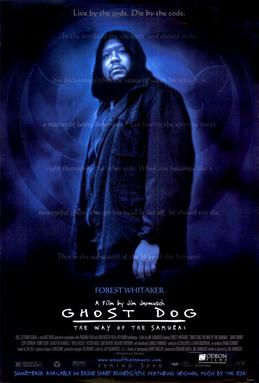
Ghost Dog (Forest Whitaker) is a Black American hitman who has organized his life entirely around the samurai code, drawing on Yamamoto Tsunetomo's Hagakure as his guide. Raymond (Isaach De Bankolé) is a Haitian ice cream vendor. They are, by every measure the film offers, best friends—perhaps each other’s only real friend. They meet regularly at Raymond’s truck, share ice cream, laugh together, talk to each other at length. They have never shared a common language. Ghost Dog speaks English. Raymond speaks French. Neither understands the other’s words.
What does the film argue about language?
The Ghost Dog and Raymond friendship is a quiet provocation embedded in the film’s larger architecture. At one level it is simply tender: two men who have found each other, who show up for each other, who hold each other in the kind of regard that most people never experience. But as a formal argument about language, it is radical. It refuses the assumption, which the lesson’s other techniques all quietly share, that shared verbal language is the necessary ground for shared meaning.
When Ghost Dog speaks to Raymond, the propositional content of his utterance is not reaching its destination. Raymond does not know what Ghost Dog has said. And yet Raymond responds warmly, specifically, in his own French that Ghost Dog does not understand, and both men seem satisfied with the exchange. What is happening? Not information transfer. Not communication in the conventional sense. Something else: the enactment of relationship through the act of address itself. To speak to someone, to turn toward them with language even when the words cannot cross, is already a social act: an act of recognition, of care, of presence. This is Austin’s performative dimension in its most stripped-down form: the utterance doing something regardless of whether its content is received.
The film therefore poses a question the lesson’s other examples don’t quite reach: if communication this profound is possible without shared verbal language, what exactly is shared verbal language for? The friendship does not argue that language is unimportant. It argues that language is not only, or even primarily, a vehicle for the transfer of information. It is also a ritual, a gesture, a form of keeping faith with another person through the act of speaking to them. Ghost Dog and Raymond keep speaking to each other across the gap not despite their mutual incomprehension but partly because of it: because the act of speaking is itself the relationship, not merely its instrument.
This has a direct implication for ethnographic writing. Much of the discipline’s attention to language focuses on what people say and what it means (the content of utterances and the cultural logics they encode). The Ghost Dog and Raymond relationship insists on attending to the act of speaking as such: what it means that these two people speak to each other at all, in these particular rhythms and registers, with this particular quality of attention. Before the words, there is the address. Before the content, there is the choice to communicate. Writing that can capture this dimension (the relational and ritual dimension of language use, prior to its propositional content) adds something that content-focused analysis misses.
What formal techniques produce this effect?
Jarmusch uses subtitles as his central device. Viewers, we, understand what Ghost Dog says in English and what Raymond says in French, though neither character has access to the other’s side. This creates a structurally peculiar intimacy. The viewer knows more than either participant: we hold both voices simultaneously, feel both meanings, and experience both the gap between them and the warmth that crosses it. The gap and the connection coexist in the viewer’s comprehension in a way they never do for either speaker.
This is not a trick. It is a formal argument about the relationship between understanding and connection. Jarmusch is showing that comprehension and care are separable: that you can understand everything being said and remain unmoved, and that you can understand nothing being said and be profoundly reached. The subtitles give the viewer a position of linguistic privilege that neither Ghost Dog nor Raymond has, and yet that privilege does not make the viewer closer to either man than they are to each other.
Jarmusch also uses ritual and repetition to establish the friendship’s reality before the language question is raised in its full force. The recurring visits to the ice cream truck, the specific choreography of their greetings, the sharing of ice cream: these establish the relationship as something real and substantial through repeated physical practice. By the time the film makes the language gap fully visible, it has already been demonstrated that the friendship does not depend on verbal comprehension for its substance. The ritual came first; the language gap is revealed as something the ritual has already survived.
What is transferable to ethnographic writing?
Maybe three things:
First, the practice of writing toward the act of address rather than only its content. When an interlocutor speaks, the ethnographer’s attention typically moves quickly to what is being said (its meaning, its implications, its relationship to the analytical frame). Ghost Dog and Raymond invite a prior question: what does it mean that this person is speaking to this other person, in this setting, with this tone, at this moment? What is the act of address doing before its content arrives? This question is especially productive when writing scenes of communication across difference (difference of language, power, status, or cultural framework) where the act of speaking may be doing something the words alone cannot carry.
Second, the technique of holding both sides of an exchange in view simultaneously. Jarmusch’s subtitles gives the viewer access to both positions at once. In ethnographic prose, this can be achieved through careful structural choices: alternating perspectives within a scene, allowing two voices to occupy the same passage without one subordinating the other, or explicitly marking the places where one speaker’s meaning is not available to the other. Writing that holds the gap open (i.e., that makes the incomprehension visible without resolving it) is more honest to many fieldwork encounters than writing that presents a seamless account of mutual understanding.
Third, the recognition that the most significant communication in fieldwork may be happening outside verbal language. This connects to the lesson’s treatment of silence, but goes further: Ghost Dog and Raymond’s friendship is built on physical presence, shared ritual, sustained attention, and the quality of showing up. These are modes of communication that leave little in the transcript and a great deal in the body and in memory. Ethnographic writing that can render them not as the absence of language but as a different register of It reaches dimensions of social life that word-focused accounts cannot access.
Ghost Dog and Raymond also offer something quietly important to ethnographers who work across languages they do not fully speak, or in settings where their access to verbal communication is partial or mediated. The friendship is a model for what is possible in that condition: not a deficit requiring correction, but a relational form with its own integrity, its own channels, and its own kinds of knowledge.
7. From Field Note to Language-Attentive Prose: A Worked Example
Raw note:
“Interview with Fatima, community organizer. She kept using the word ‘dignity’; said it about four or five times. Translated from Arabic at some points, switching back and forth. Hard to follow exactly. She talked about how the neighborhood had ‘dignity’ before the development project, and how the community wanted ‘dignity’ not just ‘services.’ Also said something about her grandmother’s house. I didn’t catch all of it. The interpreter translated it as ‘that place was full of life.’ The word in Arabic might have been different, something that meant life but also maybe history or continuity? Felt important.”
The note is honest about its own limitations (the missed translation, the untranslated term) but those limitations are not yet in the writing. They are noted and then bracketed.
Shaped prose:
Fatima returned to the word “dignity” throughout the interview: in English when she was addressing me, in Arabic when she was explaining herself to herself or to the interpreter. The Arabic word she used in the passages the interpreter rendered as “dignity” was karama, a term that carries something closer to honor, to social standing, to the recognition owed a person by the community around them. “Dignity” catches part of it. But karama implies a relationship—something that can be accorded or withheld by others—whereas “dignity” in English is more often treated as inherent, something that cannot be taken away. The difference matters: Fatima was not talking about something people have regardless of circumstances. She was talking about something the development project had taken.
At one point she mentioned her grandmother’s house in a way that the interpreter translated as “that place was full of life.” The Arabic word, as far as I could determine later, was ‘umr, literally “age” or “lifetime,” but used to describe a place saturated with the accumulated living of the people who had inhabited it. “Full of life” is not wrong. But it smooths the temporal dimension: the house was not simply lively; it held time.
The revision takes the raw note’s honest uncertainty and makes it analytically productive. The etymology of karama is used not to show off but to expose the political stakes of the translation choice: dignity-as-inherent versus dignity-as-relational. The interpreter’s rendering of ‘umr is acknowledged rather than replaced; the ethnographer’s subsequent inquiry is included in the account; and the difference between “full of life” and “holds time” is used to name what the development project had actually destroyed. The two untranslated words are preserved in the prose and earn their place by doing work that their translations cannot.
Works Cited:
Agar, Michael. 1994. Language Shock: Understanding the Culture of Conversation. New York: William Morrow.
Asad, Talal. 1986. “The Concept of Cultural Translation in British Social Anthropology.” In Writing Culture: The Poetics and Politics of Ethnography, edited by James Clifford and George Marcus, pp. 141–164. Berkeley: University of California Press.
Austin, J.L. 1962. How to Do Things with Words. Oxford: Oxford University Press.
Basso, Keith H. 1970. “‘To Give Up on Words’: Silence in Western Apache Culture.” Southwestern Journal of Anthropology 26(3):213–230.
Levy, Lital and Schachter, Allison. 2015. “Jewish Literature / World Literature: Between the Local and the Transnational.” PMLA 130, no. 1: 92–109. http://www.jstor.org/stable/44015687.
Miller, Daniel. 2011. Tales from Facebook. Cambridge: Polity Press.
Nossem, Eva. 2015. “Queering Lexicography.” Queering Translation, Translating the Queer, pp. 172-187. London: Routledge.
PEN America Translation Committee. 2023. The 2023 Manifesto on Literary Translation. In PEN America. https://pen.org/report/translation-manifesto
Venuti, Lawrence. 2012. The Translator’s Invisibility. Routledge eBooks. https://doi.org/10.4324/9780203553190.
Focus
Attend to what words do in context and not simply what they mean.
Learning Goals
- Explain the concept of languaculture and articulate why language and culture cannot be understood independently of each other in ethnographic work
- Recognize language as action (performative rather than merely descriptive) and identify what specific utterances are doing in the social situations where they occur
- Distinguish between translation across languages and translation within a single language, and apply appropriate techniques to both
- Apply specific writing techniques (layered translations, register shifts, preserved untranslated terms, written silence, speech rhythms) to render language with analytical precision
- Identify the ethical and political dimensions of translation (whose language gets translated, for whom, at what cost) and write with appropriate accountability for those choices
- Transform a field note with linguistic complexity (code-switching, untranslated terms, uncertain translation) into prose that makes the complexity analytically productive rather than papering over it
Activities
- Activity 1: The Rich Point Recall a moment from fieldwork, daily life, or conversation in which a word or phrase produced confusion, surprise, or a sense that the speakers were not quite sharing a framework—what Agar (1994) calls a “rich point.” Write a 200-word account of the moment that treats the linguistic breakdown as data rather than as noise to be cleared up. What does the confusion reveal about the different frameworks at work? What would have been lost if the confusion had been smoothed over by a quick clarification?
- Activity 2: Layered Translation Choose a piece of institutional or professional language (a policy document, a meeting transcript, a medical or legal form) and identify three terms that are doing more cultural work than they appear to. For each term, write a layered translation: first the term as used, then a layer of interpretive context that reveals what the term is managing, obscuring, or performing. After writing, reflect: does the layered translation make the writing longer, or denser, or both? What would be lost if you simply substituted a plainer equivalent?
- Activity 3: Preserving the Untranslatable Find an instance in your fieldwork notes or in a published ethnographic text where a word, phrase, or expression is glossed or paraphrased (where the interpreter, ethnographer, or author has chosen a translation rather than preserving the original). Write two versions of the passage: one that translates, one that preserves the original term and uses context and narration to carry its meaning. After writing, reflect: what does each version claim to know? Which is more honest about the limits of the ethnographer’s access to the original meaning?
- Activity 4: Writing Code-Switching Think of a multilingual exchange you have witnessed or participated in (or find one in a published text) in which speakers switched between languages in the course of a single conversation. Write a 200-word account of the exchange that makes the switches analytically visible: not just noting that they occurred, but writing what each switch was doing socially, relationally, or politically. After writing, reflect: how do you write the switch without simply describing it? What does the prose need to do for the reader to feel the social meaning of the language shift?
- Activity 5: Language as Action Take a short piece of dialogue from your field notes (a real or reconstructed exchange) and write a brief analysis of what each utterance is doing rather than what it is saying. Use Austin’s framework (performative vs. constative) as a starting point, but go beyond it: what social positioning, relational negotiation, or institutional claim is each utterance making? Then rewrite the dialogue in a way that makes those actions visible in the prose, without stating them directly.